
We all have our ways of marking time. As a photographer, my life is measured from one story to the next. My oldest son was born in the middle of a long story about the Endangered Species Act. My daughter came along with a pack of gray wolves.
Twenty stories later, though, it’s the story in Alaska that I’ll remember best. It was the story about the loss of wilderness — and the story during which my wife Kathy got cancer. That’s the one that made time stand still. I stopped taking pictures on the day when she found that tumor (肿瘤). Cruelly, it was Thanksgiving. By Christmas, she had become very weak. Some days she was so sick she couldn’t watch TV.
Early examination saves time. But ours was not early. By the time you can feel it yourself, it’s often bigger than the doctor want it to be.
Cancer is a thief. It steals time. Our days are already short with worry. Then comes this terrible disease, unfair as storm at harvest time. But cancer also has the power to change us, for good. We learn to simplify, enjoying what we have instead of feeling sorry for what we don’t. Cancer even made me a better father. My work had made me a stranger to my three kids. But now I pay attention to what really matters. This is not a race. This is a new way of life and new way of seeing, all from the cancer.
In the end each of us has so little time. We have less of it than we can possibly imagine. And even though it turns out that Kathy’s cancer has not spread, and her prognosis (诊断) is good. We try to make it all count now, enjoying every part of every day.
I’ve picked up my camera again. I watch the sky, searching for beautiful light. When winter storms come, Kathy and I gather our children and take the time to catch snowflakes (雪花) on our tongues. After all, this is good. This is what we’re living for.As a photographer, the author used to ______.
| A.leave his daughter with a pack of gray wolves |
| B.express his love for his family in a special way |
| C.miss a great many important historical moments |
| D.devote much more to his career than his family |
Why did the author decide to stop taking pictures?
| A.To cure his own disease. | B.To spend more time with his wife. |
| C.To seek a better position. | D.To leave the wilderness alone. |
What is the biggest change the cancer has brought to the author?
| A.He treasured every bit of time with his family. |
| B.He has become a stranger to his children. |
| C.He takes his work more seriously. |
| D.He focuses more on medical care. |
The author and his family catch snowflakes on their tongues probably because ______.
| A.the snowflakes taste very good |
| B.snowflakes are what they feed on |
| C.they regard that as a way to enjoy life |
| D.there is beautiful light in the snowflakes |
阅读下面短文,从各题A、B、C、D四个选项中,选出最佳选项。
Your brain isn’t a muscle, but you can treat it like one
Many people focus on physical fitness, but few know that brain fitness is also something you can work on. In fact, you can exercise your brain as often as you do to your arms or legs —and the results can be positive and empowering.
To improve your brain, you can’t simply repeat the same exercises over and over. Just as lifting a two—pound weight will stop challenging you, so will repetitive exercises such as crosswords or Sudoku. Once you master easy exercises, you must move on to harder ones in order to push your brain —like your muscles —to a new level. 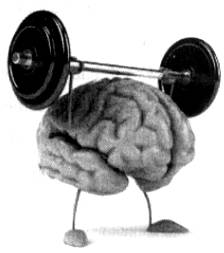
The science behind brain training
Scientists once believed that your mental abilities were fixed in adulthood. Since studies have shown just the opposite, millions of people around the world have adopted the new practice of brain training. The most popular of these brain training products is made by the San Francisco—based Lumosity. Lumosity's scientists with an experienced team of game designers have developed a fun,effective online brain training program that measures,tracks,and adapts to your progress,so you'll always be challenged.
Promising studies on the effects of brain training
In a 2013 Stanford study,a treatment group of 21 breast cancer survivors used 12 weeks of Lumosity training to work on processing speed,mental flexibility,and working memory tasks. On average,those who trained improved on tests of these abilities,compared to a group that did not train with Lumosity.
There is even some evidence suggesting that Lumosity may be beneficial to normal,healthy adults. In a 2011 study by Lumosity and San Francisco State University researchers. 13 people who trained over 5 weeks improved working memory scores by 10%and attention scores by 20%.
Brain training is designed to meet real-life needs
The design of brain training is targeted at real-life benefits instead of improving game scores. Better attention,for example,can mean greater focus in the classroom or at an important business meeting. With improved processing speed,you might react and adapt faster to the demands of a busy life. And a better memory could mean stronger,longer relationships with the people closest to you. We can learn from the passage that _________.
| A.brain training speeds up the recovery of breast cancer |
| B.your brain is like a muscle because it gives you power |
| C.people's mental abilities can't develop after they grow up |
| D.Lumosity can measure,track and suit your level as you improve |
Which skill may brain training not improve?
| A.Better attention. | B.A better memory. |
| C.Better writing skills. | D.Higher processing speed. |
What can we infer from the passage?
| A.People should care more about physical health instead of mental health. |
| B.Brain training has been proved effective through scientific researches. |
| C.A bad memory is the only reason for weak relationships with people. |
| D.Playing online games is the best way of brain training. |
What's the best title for the passage?
| A.Brain Training Makes a Difference | B.Train Your Brain like a Muscle |
| C.Lumosity,Your Best Choice | D.How to Train Your Brain |
The word I'm going to introduce to you today is — phubbing. Let's see the definition of this term:
phubbing n. the act of snubbing(冷落)someone in a social setting by looking at your cell phone instead of paying attention
As you can probably guess,phubbing is a blend of phone and snubbing. The term was coined by a 23—year—old Melbourne resident Alex Haigh. Obviously,he got fed up with how people are always checking Facebook or Twitter on their phones when they are supposed to be interacting with someone face to face. He wanted to put an end to this social phenomenon,therefore he came up with this catchy term.
And it did catch on. The word's earliest media mention dates back to June 2012,and in a little over a year's time,phubbing has already been picked up by almost all the mainstream media outlets one can think of.
Here is a typical example from the British newspaper The Independent. In the article titled The Rise of Phubbing,which was published on August 5,2013,Tom Chatfield writes,there's an uncomfortable truth at the heart of phubbing:other people are easier to handle when seen on screen. They're less likely to demand unreasonable efforts such as undivided attention or clean shirts.
While the term phubbing has undoubtedly taken off,some people question why it is called phubbing instead of phnubbing. Alex Haigh has not personally addressed the issue,but word has it that phubbing sounds more crispy and thus easier to remember.
Phubbing is indeed a universal problem that can no longer be ignored. So why do people keep phubbing each other if they know it's rude? Is there anything we can do to stop it? Or maybe we should just be more kind,because sometimes there are good excuses to phub.
I think there is plenty we can do to try and stop phubbing. For starters,we can join Alex Haigh in his Stop Phubbing campaign. Remind our friends and family that phubbing is not appreciated. We can also make or download some anti—phubbing posters to spread the word in public places. And don't forget that some phubbers simply do not realize the harmful effect their behavior has on others,so be brave enough to stop them,even if you are a total stranger. This passage is mainly talking about _______.
| A.the rise of phubbing in all the mainstream media outlets |
| B.a new term “phubbing”and its problem |
| C.the campaign of keeping phubbing |
| D.different opinions on phubbing |
The author’s attitude towards the act of phubbing can be described as ___________.
| A.bearable |
| B.unacceptable |
| C.reasonable |
| D.understandable |
What can we infer from this passage?
| A.People are easier to handle when seen on screen. |
| B.Alex Haigh doesn’t like the term “phnubbing” |
| C.More and more people have become phubbers. |
| D.We can phub if we have proper excuses. |
The write suggests we should _________.
| A.stop phubbing in public places |
| B.not be afraid of the harmful effect |
| C.be brave to support a stranger phubbing |
| D.remind our friends of Stop Phubbing campaign |
Hawking's Five Easy Steps for Making Yourself a Genius
As we all know,Stephen Hawking writes the book A Brief History of Time that explains the origin of the universe. The book spent 147 weeks on the New York Times Best Seller List and has sold 10 million copies. He is,most agree,very smart.
In his recently published autobiography My Brief History,Hawking offers five life lessons on how to become a genius.
1)Don’t miss opportunities by being too cool
“We showed an air of complete boredom and the feeling that nothing was worth making an effort for. One result of my illness has been to change all that. When you are faced with the possibility of an early death, it makes you realize that life is worth living and that there are lots of things you want to do. ”Seize the moment,as Oxford types would say.
2)Keep it simple
When writing A Brief History of Time,he tried to make science understandable for the rest of us. “I was sure that nearly everyone is interested in how the universe operates,but most people cannot follow mathematical equations(数学公式). ”He has trouble with them,too. “This is partly because it is difficult for me to write them down,but mainly because I don't have an inborn feeling for equations. My aim in the book was to describe these mental images in words. It is such an easy book that everybody can understand it.” The moral:You don't have to be a genius to know everything.
3)Have fun
Hawking has a long history of being a joker,and he has placed lots of bets with other scientists on the nature of black holes. One was with Cal-Tech scientist John Preskill. After paying off his bet by giving Preskill a baseball encyclopedia,Hawking wrote,“but maybe I should have just given him the ashes. ”So lighten up! Geniuses like bad jokes too.
4) Always look for a silver lining (even if you are seriously ill)
Hawking's disease has slowly robbed him of the ability to walk,move his arms,even speak. But,Hawking says,“in some ways I guess my disability has been an assist:I haven't had to lecture or teach students, and I haven't had to sit in meetings. So I have been able to devote myself completely to research.”In other words,Hawking was given lemons,and he made Champagne.
5)Don’t work too hard at school
……The passage tells us the facts about A Brief History of Time EXCEPT that ________.
| A.it explained the origin of the universe |
| B.it has sold 10 million copies up to now |
| C.it spent 147 weeks on the New York Times Best Seller List |
| D.it included Hawking's five life lessons on how to become a genius |
According to the passage,which of the following statements is guiding you to be a genius?
| A.Place lots of bets with your friends. |
| B.Seize the moment to learn everything. |
| C.Find something good even in bad situations. |
| D.Get to know everything including math equations. |
Hawking shows his viewpoint by ____________.
| A.making comparisons | B.quoting a famous saying |
| C.listing the numbers and equations | D.talking about his own experience |
Four million children are caught up in the war in Syria. Thirteen-year-old Rabia is one of them. Tall and thin, she sits shaking in a yellow T-shirt at the Al Marj settlement, close to the Lebanese-Syrian border. 
Home for Rabia was once a two-story house near Damascus. Now it is a tent shared with her nine family members.
Rabia’s face is covered with dirt, and she is tired and cold. She has just finished work, picking up potatoes that fell from a truck. Her typical day starts at 4 a.m., and she works a double shift that lasts about 16 hours, putting potatoes into bags. The only choice for her is that she can choose the first eight hours or the second eight hours. For this, she gets paid about $8 a day.
Working means Rabia misses school. Back in her village, she was the best in her class and good at everything. Her favorite subjects were Arabic literature and math. But, like many children now living in the settlements—there are no official refugee (难民)camps in Lebanon —that was Rabia’s old life. Life before war, before her family moved five times to escape the bombs, before leaving behind her bedroom, her toys and her friends without packing a bag, before “half the people I know”were dead.
The old life was full of laughter with her sister, Wala. But Wala, 14, got married two days ago to an 18-year-old Lebanese. Rabia is happy for her sister. Life in the settlement is tough— the children have nowhere to play, the bathing is poor and sexual abuse is out of control. You can’t blame parents —often confused, illiterate (不识字的)and poor—who want to marry off their daughters. They fear for their safety.
Increasing numbers of Rabia’s girlfriends are getting married. Once in rural Syria, a girl got married at 16. According to UNICEF, the age is now dropping to 12 or 13. It is no secret that Lebanese men want to marry Syrian refugee girls, who work hard and don’t ask for anything. Where is the passage most likely to have been taken from?
| A.A news report. | B.A book review. |
| C.A history book. | D.A travel magazine. |
The underlined word “shift”in Para. 3 probably refers to _____.
| A.the extra task | B.the low pay |
| C.the potato factory. | D.the working period |
The writer's purpose for writing Para. 4 is to ________.
| A.present the dream of Rabia | B.show the damage of the war |
| C.predict the future of Syrian girls | D.compare the life before war and now |
Why are so many young Syrian girls getting married?
| A.They have no good friends to play with. |
| B.They want money from the husband family. |
| C.Their parents are worried about their safety. |
| D.Their parents are confused,illiterate and poor. |
In today's fast paced, high stress world people are working longer hours than ever, and often exhaust themselves at day's end in front of the television to relax enough to begin again in the morning.However, television watching, for most people, does not really lower stress.Studies show that TV viewing more than an hour or so actually creates stress and, especially in women, may lead to the blues.Most individuals are unaware that doing some exercise after work makes them more energetic since it increases energy levels.
Wise use of free time does not mean getting an advanced degree, although the mental encouragement gained through education is unbeatable in keeping your mind active.Learning new things nearly always adds a spark to your daily life, especially if it is a favorite topic, such as sport, fashion, or art.Also, look through your bookstore or library to find books on your interests.Try to replace a half hour TV watching with reading.
It is reported that in the United States recently, many individuals have as few as two good friends.Long work hours and car commute act to separate people from each other.This separation is deadly.Find ways to meet people at the end of the day and on weekends.Often this can be best done by combining activities, such as by joining a walking group to get both exercise and companionship.Taking a class will lift your spirits and allow you to meet others with similar interests.Hobbies are great for reducing stress and provide another opportunity for social interaction.
Using your free time to aid your health may include these elements and many more, such as going to concerts and spending time with family.Overall, the key is to spend less free time being passive.The best ways to use free time are to be mentally and physically active, spend some time outdoors, and interact with other people on a regular basis.What can we learn from the passage?
| A.Watching television may cause women to feel depressed. |
| B.Finding interests and hobbies in common means taking a class. |
| C.Going to concerts is the best way to make you mentally active. |
| D.Getting an advanced degree in education always lights up your life. |
What does the underlined word "commute" in Paragraph 3 probably mean?
| A.The arrangement to work every day. | B.The journey to work every day. |
| C.The communication between people. | D.The separation between people. |
Which would be the best title for the passage?
| A.Live a Happy and Healthy Life | B.Relax Yourself in Various Ways |
| C.Spend Your Free Time Wisely | D.Interact With Others Outdoors |