
“Forgiveness is the sweetest revenge.” I saw this wonderful old saying again in a book recently. It got me thinking about all the times that I have been 31 to forgive others in my life and all the joy that it has brought me. One 32 stands out particularly well.
I was a young boy at a summer camp. I was having a great time and 33___ everything about it except for another young boy of my age. To say we didn’t
34 would be a statement that made the situation less serious than it really was. We spent most of the week irritating, insulting (侮辱), and picking on each other.
35 finally came to a fight on the next to last day of camp. We got into a fist fight which I lost. 36 older boys broke it up before I was hurt too much. I spent the rest of the day alone, refusing to speak andlost in my own 37 .
The next day my spirits were 38 when Mom brought the boys in our cabin some of her delicious homemade 39 . I was enjoying a few slices of it when I saw the other boy sitting by himself at the bottom of the steps outside. He seemed very 40 right then. I am not sure what moved me to do so, but I took my pizza down and 41 it with him. It made all the anger and pain inside me 42 . We became friends after that. I never got into another fist fight either. I had found out that sharing and forgiving were much more fun and a lot less painful.
Forgiveness is 43 the sweetest revenge. It can turn an enemy into a friend. It can 44 a heart from the chains of anger, hatred, and pain. It can open a soul to the sweetness of love and joy once again. May your life always be 45 of sweet forgiveness.
A.disappointed B.satisfied C.unwilling D.able
A.memory B.lesson C.incident D.week
A.struggling B.exploring C.enjoying D.remembering
A.get across B.get along C.hold on D.hold up
A.Thoughts B.Words C.Friends D.Conflicts
A.Surprisingly B.Thankfully C.Unexpectedly D.Regretfully
A.fight B.regret C.luck D.anger
A.sunk B.broken C.lifted D.shown
A.pizza B.hamburger C.pie D.sandwich
A.angry B.proud C.ashamed D.lonely
A.presented B.shared C.distributed D.divided
A.go away B.go on C.crowd in D.build up
A.nearly B.merely C.truly D.hardly
A.keep B.cure C.comfort D.free
A.full B.aware C.confident D.certain
第一节:完形填空(共20小题;每小题1.5分,满分30分)
阅读下面短文,从短文后各题所给的四个选项(A,B,C和D)中选出可以填入空白处的最佳选项,并在答题卡上将该项涂黑。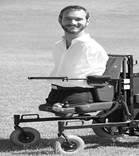
Imagine being born without arms. No arms to hug someone, and no hands to touch. Or what about being born without legs? Having no to dance, walk, run, or even stand on two feet. Now put both of those scenes together: no arms and no legs. How would that one’s everyday life?
Without any medical explanation, Nick Vujicic came into the world with neither arms nor legs. Imagine the his parents felt when they saw their baby being what the world would consider imperfect and . Little did they know that this beautiful limbless baby would one day be someone who would and motivate people from all walks of life.
Throughout his childhood Nick dealt with the of self-respect, and struggled with depression and . As Nick grew up he learned to deal with his and started to be able to do more and more things on his own. He to his situation and found ways to tasks that most people could only do by using their limbs, such as cleaning teeth, hair, typing on a computer, etc. As time , Nick began to eagerly accept his and achieve greater things.
Nick got a double bachelor’s degree in accounting and financial planning. By the age of 19, Nick had started to his dream of encouraging others by sharing his story through speaking. He found the purpose of his . Now at 27 years old, he has accomplished more than most people. He has travelled around, his story with millions of people. He is a true inspirational and motivational .
|
|
|
|
|
|
|
|
|
|
|
|
|
|
|
|
|
|
|
|
第一节:完形填空(共20小题;每小题1.5分,满分30分)
My daughter is a single parent. She works hard to ______ for herself and her three young sons. She budgets carefully and ______ to plan for the little luxuries (奢侈品) and treats that others take for granted. When her eldest son, David, wanted a _____ so that he could do an after-school newspaper delivery job, she ______ and soon, he was the proud ______ of a good second-hand bike.
One afternoon, my daughter asked David to go to a local shop. He rode his bicycle, ______ foolishly left it outside the shop without ______ it up. When David came out of the shop, it was______. He walked home in ______ and then, together with his frustrated mother, went to the local police station to report the ______.
Imagine their ______ when they arrived at the station: a car parked out front had David’s bike wedged (挤进) in its boot (汽车后部的行李箱). The ______ told them how he’d seen a group of kids _____ the bike once my grandson had gone inside the shop.
The driver – in his late teens himself – had called out to them to “leave that bike ______!” Despite this, one member of the group ______ on the bicycle and rode it away while the others followed. Not to be ______, the teen got in his car, drove after them and ______ that they give the stolen bike back.
He was happy to be able to _____ it to my grandson together with a lecture (echoed by the policeman and his mother) about the silliness of _____ to use the bike lock. _____, in all the excitement, he slipped away, without even giving them his name or telephone number.
|
|
|
|
|
|
|
|
|
|
|
|
|
|
|
|
|
|
|
|
At just 18 years old, Canberra student Lochie Ferrier has already conducted research in a frontier field — aerospace engineering. Aerospace engineering is the primary of engineering concerned with the science and technology of aircraft and spacecraft.
In 2014, he was one of 80 high school students worldwide who a six-week science and engineering program at MIT. During the program, he was by the institute’s scientists, and developed a method to identify inactive satellites. This method, called OASIS, is designed a way to help manage space debris(碎片), which operating satellites.
“One solution to this problem is a robot that can gather pieces of space debris and store them in orbit,” he says. “These pieces could be to new satellites later, thus the costs and launch weights of new satellites.” However, satellite identification technology would be needed for this solution, and that’s what Lochie is working on. “I hope this method would be put into practice in the near future, in the next 10 years,” he says.
Lochie has made the of the Young Innovators category of the Australian Innovation Challenge Awards with his OASIS. This category is open to students aged 21 years or and carries a $ 5,000 prize. If he won, he would use the money to help fund research into OASIS. “My plan for using the money would be to try to use materials which could stand up to the environment of space,” he says.
He is also considering how to the technology to organizations such as NASA and satellite manufacturers.
Lochie’s in aerospace engineering was aroused by the big dish antenna(碟形天线)at NASA’s tracking station near Canberra,which he visited in his early teens. He said his software design and development teacher at Canberra Grammar School him, too.“He taught me valuable project management and skills which I applied to OASIS.”
Lochie has been attending Canberra Grammar School and will soon exams for admission to universities. He his time between schoolwork, his personal projects such as OASIS and the development of apps, rock climbing, and playing classical violin. The teenager is well on his way to realizing his sky-high ambition.
|
|
|
|
|
|
|
|
|
|
|
|
|
|
|
|
|
|
|
|
Why do young adult children become independent so much later than they did in 1970,when the average age of independent living was ? Why have reduced class sizes and increased per-pupil expenditures (花销)not 36 higher academic achievement levels? Why is the mental health of today’s kids so poor when with that of children in the 1960s and before? Why do today’s become defensive when told by teachers that their children have misbehaved in school?
The answer in two words: parental . Those two words best summarize the between “old” child raising and new, post-1960s parenting. Then, the overall philosophy was that parents were not to be involved with their kids. They were available crisis, but they stood a (an) distance from their kids and allowed them to experience the benefits of the trial-and-error process. It was the child’s , back then, to keep his or her parents from getting involved. That was children learned to be responsible and determined.
Today’s parents help their kids with almost everything. These are parents who are when it comes to an understanding of their purpose in their kids’ lives. Their involvement leads them to personalize everything that happens to their kids; , the defensiveness. But given that schools and mental health professionals have been pushing parent involvement for nearly four decades, the confusion and defensiveness are .
University researchers analyzed three decades of data relating to parent participation in children’s academics. Their conclusions what I’ve been saying since the 1980s: parental help with homework a child’s academic achievement and is not reflected on standardized tests.
Parents who manage a child’s social life interfere with the of good social skills. Parents who manage a child’s after-school activities grow kids who don’t know how to their own free time. Parents who get involved in their kids, with peers grow kids who don’t know how to avoid much less trouble.
These kids have anxieties and fears of all sorts and don’t want to leave their . And their parents, when the time comes, don’t know how to being parents. You can imagine what will become of their fu ture.
|
|
|
|
|
|
|
|
|
|
|
|
|
|
|
|
|
|
|
|
Gandi wanted so badly to help the world that he devoted himself to removing self-interest out of his heart and mind, leaving them pure, healthy, and free to love. It took him nearly twenty years to gain such control of his process.
When in South Africa, Gandi would sometimes walk fifty miles a day and only a few hours a night. into his seventies Gandi wrote hundreds of letters every week; when his right hand became , he learns to write with his left. Once, while he was writing a letter, the lantern giving light , in which case most of us would have and gone to bed, Gandi, knowing his timely reply would be particularly to those who had written to him, went and finished writing by moonlight. If asked to live like this, we would say,“Impossible!”Gandi would , “Oh, no. It’s possible, when your mind is flooded with 46 for all.”
Late in Gandi’s a Western journalist asked, “Mr. Gandi, you’ve been fifteen hours a day for fifty years. Don’t you ever taking a few weeks off and going for a vacation?” Gandi laughed and said, “Why? I’m on vacation.” This world-famous figure, who could have been prime minister of India and one of the richest men in Asia, announced he wasn’t on becoming rich or famous. He wanted something far – to place all his talents, resources, time, and energy in a trust for the world.
“You needn’t be if you’ve made mistakes. Just continue to try your . If you fall, pick yourself up and march on. If you cannot run, walk. If you cannot walk, crawl. The alone brings a continuing wave of joy in which every personal problem and every suffering is forgotten.” said Gandi.
|
|
|
|
|
|
|
|
|
|
|
|
|
|
|
|
|
|
|
|